
Challenge Rules

Rules

Students and mentors are expected to familiarise themselves with the competition regulations for the challenge they are competing in, as well as the RCJA General Rules which cover expectations across all challenges.

Platinum National Sponsor

General Rules

The General Rules cover all RCJA Challenges. It is important for all teams and mentors to read these rules.

OnStage Rules

Make sure you read the latest rules for this challenge. These rules can change from year-to-year.

Rescue Line Rules

Make sure you read the latest rules for this challenge. These rules can change from year-to-year.

Rescue Maze Rules

Make sure you read the latest rules for this challenge. These rules can change from year-to-year.

Soccer Rules

Make sure you read the latest rules for this challenge. These rules can change from year-to-year.

2026 Spike Prime Challenge

The theme:
Survivors of the Future: Robots on a New World
 
The brief:
Embark on a Spike Prime World of Discovery!
Get ready to visit worlds of imagination with LEGO Spike Prime!
We’re challenging you to build amazing creations that can autonomously explore and navigate their chosen world.
Whether you’re a science whiz, a history buff, or a future-thinking innovator, there’s a challenge for everyone!
 
You will need to:

– Work as a team to research, design and build a prototype of your robot.
– Document your research, designs and programming (show us your design thinking throughout the process)
– Submit images and video of your robot
– Present your documentation through a video (include slides, short videos of how it works, the design, how it might move, behave).
– Be creative. Showcase how it works and it’s special features.

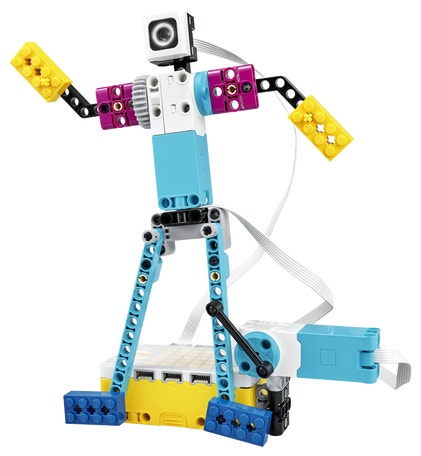
This challenge is for LEGO® Education SPIKE™ Prime robots only.
Specifications

  1. Your autonomous creation needs to be your own design. You are encouraged to research and find examples of what others have already done, but your final product should be your own: not a copy of someone else’s idea.
  2. You will create a Learning Journal to show evidence of:
    1. The research you did,
    2. How you came up with the idea for your design (try brainstorms, flowcharts, drawings, etc.),
    3. Planning your design and program (justify why you made the decisions you made),
    4. Images of your build along the way,
    5. Anything else you want to share about your design.
  3. Your robot cannot be remote controlled; you should use hardware and write a program that enables it to be autonomous.
  4. The robot should have features that can navigate or explore the ‘new world’ that you are trying to explore.
  5. You are absolutely welcome to decorate your robot to make it look more like what you are trying to imitate. Just make sure that you don’t spend all your time on decorating and forget about the programming! We need to see a copy of your whole code, not just parts of it. You can send it as a separate file.
  6. You need to use a Spike Prime kit for the base model of your robot. You can use other Lego parts to build your robot however all sensors need to be from the Spike Prime kit or the Spike Expansion kit. 

Don’t forget to have fun and be creative!!

Submission

This should include:

  1. An annotated copy of your code
  2. A video (max 3 minutes) of you demonstrating your robot as it shows off its features. Videos must be saved in a standard video format (mpeg, avi, mov, wmv). Include in your video:
    1. A brief introduction where each team member discusses their role in the team,
    2. A discussion about why you think your robot is suited to exploring or completing a task in your world. Did you use motors, sensors, LEGO® elements? How do they add interest or functionality?
    3. A description of the features that you built/programmed into the robot, and why they are useful.
    4. A discussion of what you, as a team, found the hardest, and what you enjoyed the most about this challenge.
    5. A demonstration of your robot in action. Zoom in and out as your robot performs its task.
  3. A learning journal (PDF is best) with all your supporting evidence, outlined in (2.) in the specifications. It is helpful for us if you include photos of the robot in this document so we can see how well it has been built or a shared link to your Google Doc/Slides/ Folder with all your supporting evidence, outlined in (2) in the specifications. Don’t forget a copy of your code. (Make sure sharing permissions are working.)

Our Sponsors

Platinum National Sponsor

University Affiliations